

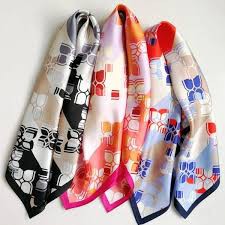
The quality of silk fabrics can be identified from the following aspects:
Observe the gloss
The gloss of real silk is soft and uniform, bright but not dazzling. The gloss of artificial silk fabrics is also bright, but not soft and pleasing to the eye. The gloss of polyester silk is uniform, but there is glitter or shiny silk. Nylon silk fabrics have poor gloss, as if they are coated with a layer of wax.
Touch feeling
When you touch real silk fabrics, you feel a pull, while other chemical fiber products do not have this feeling. Cotton silk fabrics are harder and not soft to the touch.
Carefully observe the creases
When you squeeze the silk fabric and then let it go, there are no creases due to its good elasticity. Artificial silk fabrics have obvious creases after letting go, and the creases are difficult to restore to their original state. Although nylon silk has creases, it can also slowly restore to its original state, so don't be fooled by its illusion.
Test fiber tension
Pull out a few fibers from the edge of the fabric and moisten them with your tongue. If they are easily broken at the wetted part, it means they are rayon. If they are not broken at the wetted part, they are real silk. If the fiber has good strength in both dry and wet states and is not easy to break, it is nylon or polyester.
Listen to the friction sound
Since the surface of silk is protected by sericin and is resistant to friction, dry real silk fabrics will make a sound when rubbing against each other, commonly known as: silk sound or silk sound; while other chemical fiber products will not make any sound.
Burning method
Pull out some yarn and burn it. Real silk cannot see open flames, and it has the smell of burning hair. The silk ash becomes black particles and can be crushed by hand; imitation silk will catch fire and have a plastic smell. After the fire is extinguished, hard rubber blocks will be left on the edge.
Product number identification method
Domestic silk satin adopts a unified product number consisting of 5 Arabic numerals. The first digit of these 5 digits from the left represents the material number of the fabric. Pure silk fabric (including mulberry silk and silk) is "1", chemical fiber fabric is "2", blended fabric is "3", tussah silk fabric is "4", and rayon fabric is "5".
Price identification method
The fabric price is about twice that of chemical fiber and simulated silk satin.
The above methods can help you identify the quality of silk fabrics. It should be noted that different silk fabrics may have different characteristics, so when choosing, you should decide according to your needs and preferences.


